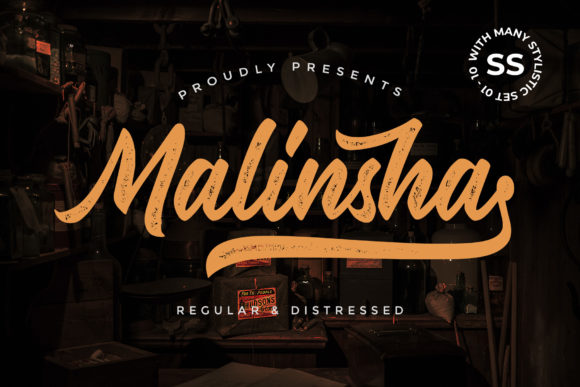
Malinsha Font: A Vintage Handwritten Script for Branding
The blank brand board stared back at me. It was for a new bakery project, aiming for that elusive "handcrafted, with a story" feel. My usual sans-serif and serif pairings felt too stiff. I needed a signature piece, something with a heart. That’s when I opened the font folder and clicked on Malinsha. Immediately, that flowing handwritten script felt like a solution. It wasn’t just a typeface; it was a mood.
Malinsha as a Logo Font for Boutique Brands
When you’re searching for the perfect Script Handwritten font for a logo, the first test is always the name. I typed the bakery's name—"The Flour Jar"—into a blank logo canvas using the Malinsha font. The result was instantly charming. The vintage style of the letterforms, with their gentle curves and organic flow, gave the name a warm, personal touch. It looked less like a corporate wordmark and more like a friendly sign written above a shop door. This is the core strength of Malinsha for logo work: it injects authenticity. For a creative studio, a handmade shop, a local café, or a skincare brand seeking a gentle, artisanal identity, Malinsha can serve as that memorable, signature typographic element.
Using Malinsha on Packaging and Product Labels
A logo is just the start. The real test for any display font is how it translates onto physical materials. I dragged the font onto a packaging mockup for a hypothetical jar of honey. The product name, set in Malinsha, became the focal point. The vintage aesthetic paired perfectly with the rustic texture of the mockup, creating a cohesive "handmade" narrative. On thank you cards or tags, the font looked equally beautiful. This is where the practical use cases mentioned—greeting cards, quotes—really shine. The flowing nature of this handwritten font makes it ideal for short, impactful phrases on labels, cards, or small packaging areas where you want to convey care and craftsmanship.
Malinsha Font for Website Headers and Social Graphics
Moving into digital space, I placed the bakery name in a website header mockup. At larger sizes, Malinsha holds its character beautifully, providing an immediate visual hook. For social media layouts, especially Instagram posts announcing a new product or a heartfelt quote, this font becomes a powerful design asset. Its unique style helps graphics stand out in a feed, enhancing audience engagement through distinct visual personality. However, it’s crucial to remember that Malinsha is a display font. Using it for long body text paragraphs on a website would severely hurt readability. Its role is for accents, headlines, and callouts—not for dense information.
Pairing Malinsha with Other Fonts in a Brand System
No brand uses just one font. After setting the logo with Malinsha, the next step was building a typography system. A handwritten script font needs a strong, readable counterpart. I paired it with a clean, neutral sans-serif for all body text on menus, website paragraphs, and informational brochures. This contrast works brilliantly: the personality of Malinsha draws attention, while the supporting typeface ensures clarity and professionalism. For a more vintage-leaning system, a simple serif font could also be a complementary partner. The key is to let Malinsha be the star for short phrases and never force it into roles where its stylistic details become a hindrance to communication.
Practical Considerations Before Using Malinsha in Client Work
Testing a font like Malinsha goes beyond just looking at it. I checked it on a business card mockup at actual print size. The details remained clear, confirming its suitability for small but crucial branded items. The mention that this font is PUA encoded is a significant technical note for designers. PUA encoding means you can access alternate characters or glyphs through special character codes, often useful for adding extra flair to logos or headlines without needing separate font files. Before finalizing any client project, always review the specific commercial font licensing for Malinsha to ensure it covers your intended use—whether for brand identity, packaging, merchandise, or digital products.
Ultimately, my experiment with Malinsha on a full brand board confirmed its niche. It’s a specialty tool in the world of fonts. For projects demanding warmth, a human touch, and a vintage sensibility—be it a café visual refresh, a bakery’s packaging, or a creative studio’s logo—this flowing handwritten script offers a compelling solution. It won’t fit a corporate tech brand or a legal firm’s website, but for the right audience seeking connection and craft, Malinsha can be the typeface that turns a blank canvas into a story.